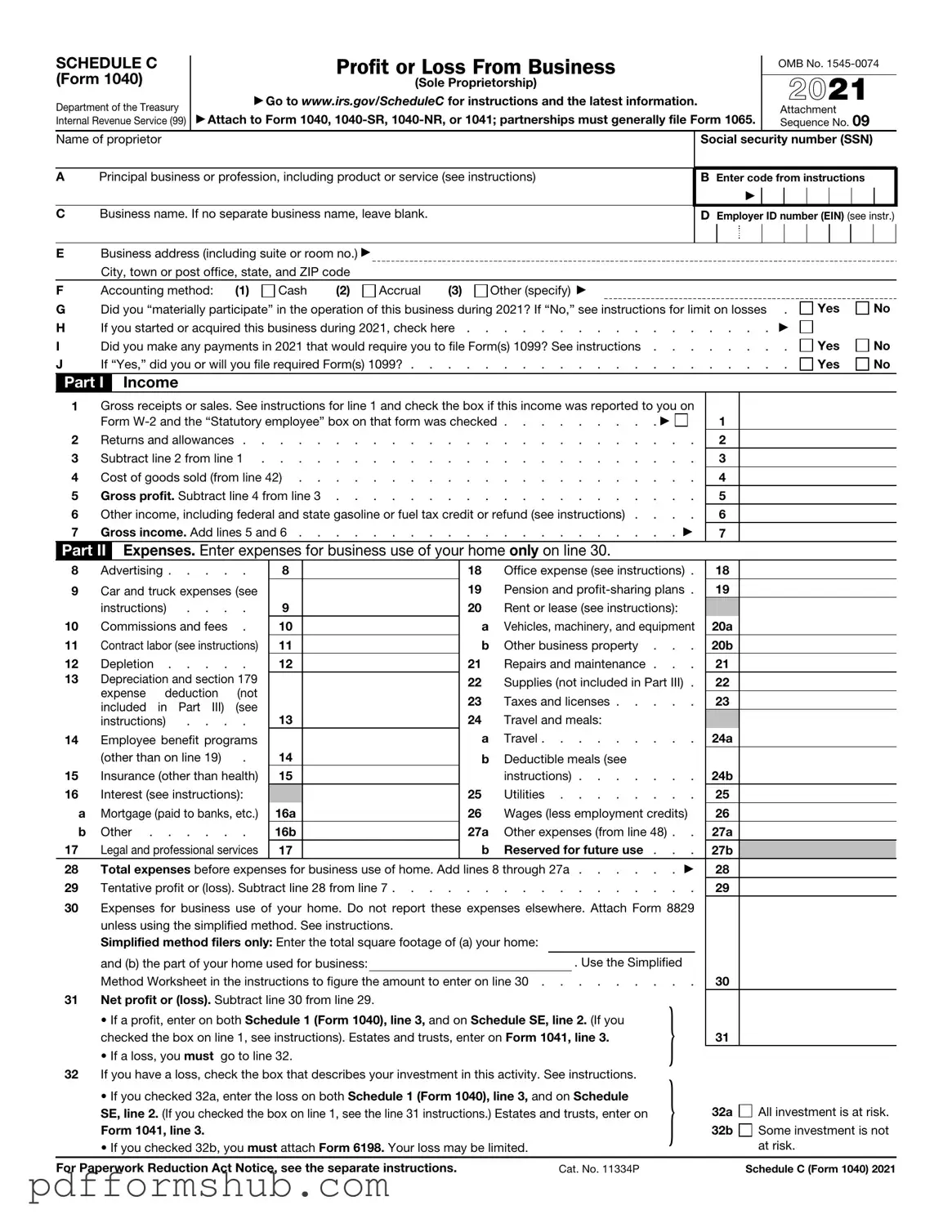
Fill in Your IRS Schedule C 1040 Form
PDF Forms Hub
Fill in Your IRS Schedule C 1040 Form
The IRS Schedule C (Form 1040) is a crucial document for self-employed individuals and sole proprietors. It allows them to report income or loss from their business activities. By filling out this form, taxpayers can detail their business earnings and expenses, which ultimately impacts their overall tax liability. Schedule C covers various aspects of a business, including gross receipts, cost of goods sold, and allowable deductions for operating expenses such as rent, utilities, and supplies. Additionally, it provides space for reporting vehicle expenses and home office deductions, making it easier for taxpayers to capture all relevant financial information in one place. Understanding how to accurately complete Schedule C is essential for compliance with tax regulations and for maximizing potential deductions. This form not only helps in determining net profit or loss but also plays a significant role in the overall tax filing process for those who run their own businesses.
The IRS Schedule C form is a crucial document for self-employed individuals and sole proprietors, as it reports income and expenses from a business. However, several other forms and documents often accompany Schedule C to provide a complete picture of a taxpayer's financial situation. Below is a list of these important documents, each serving a specific purpose in the tax filing process.
Understanding these forms and documents is vital for anyone engaged in self-employment or running a small business. Properly completing and submitting them can significantly impact tax liability and compliance, ultimately contributing to the financial health of the business.
When filling out the IRS Schedule C 1040 form, attention to detail is crucial. Here are some key actions to consider and avoid:
What is IRS Schedule C?
IRS Schedule C, officially known as "Profit or Loss from Business," is a form used by sole proprietors to report income and expenses from their business activities. If you operate a business as an individual and earn income, you'll need to fill out this form as part of your annual tax return. It helps the IRS understand how much money you made and how much you spent, ultimately determining your taxable income.
Who needs to file Schedule C?
Generally, anyone who operates a sole proprietorship must file Schedule C. This includes freelancers, independent contractors, and small business owners. If you earn money from a hobby, you might not need to file, but if you treat it like a business and make a profit, it’s advisable to report it. If you’re unsure whether you qualify, it’s best to consult with a tax professional.
What expenses can I deduct on Schedule C?
You can deduct a variety of business expenses on Schedule C, which can help lower your taxable income. Common deductible expenses include:
Keep in mind that these expenses must be ordinary and necessary for your business to qualify for deductions. Proper documentation is essential, so save all receipts and records.
When is Schedule C due?
Schedule C is typically due on the same day as your individual tax return, which is usually April 15. If this date falls on a weekend or holiday, the deadline may be extended to the next business day. If you need more time, you can file for an extension, but keep in mind that this only extends the filing deadline, not the payment deadline. Any taxes owed must still be paid by the original due date to avoid penalties and interest.
96 Well Plate Map - Make the most of your research efforts with efficient data organization.
The Florida Notice to Quit form is an essential legal document that landlords utilize to inform tenants of lease violations, which must be corrected or results in the necessity to vacate the property. For more information and to access the form, you can visit floridaformspdf.com/printable-notice-to-quit-form/. This form is critical as it marks the initial step in the eviction process, allowing tenants the chance to resolve the issue within a designated timeframe, thereby protecting the rights of both the property owner and the tenant’s ability to rectify the situation.
Creating a Lease Agreement - Returned checks will incur charges, and tenants must settle these promptly.
| Fact Name | Description |
|---|---|
| Purpose | The IRS Schedule C (Form 1040) is used by sole proprietors to report income or loss from their business. |
| Filing Requirement | Taxpayers must file Schedule C if they have net earnings from self-employment of $400 or more. |
| Business Expenses | Schedule C allows for the deduction of various business expenses, which can reduce taxable income. |
| Net Profit or Loss | The form calculates net profit or loss by subtracting total expenses from total income. |
| Record Keeping | Taxpayers should maintain accurate records of income and expenses to support their Schedule C filings. |
| State-Specific Forms | Some states require additional forms for self-employment income; check state laws for compliance. |
| Deadline | Schedule C must be filed by the tax return deadline, typically April 15, unless an extension is granted. |